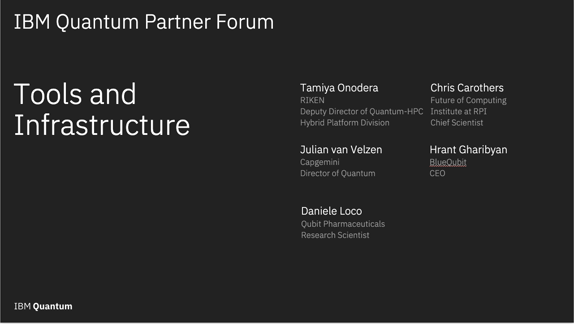
Tools & Infrastructure
About This Webcast
Examples of implementation and usefulness of quantum computing tools Speakers: Tamiya Onodera, Deputy Director, Quantum-HPC Hybrid Platform Division, RIKEN Title: Building a Quantum-HPC Hybrid Computing Platform Abstract: We are building a platform connecting five supercomputers, including Japan’s flagship supercomputer Fugaku, and two on-premises quantum computers, including an IBM Quantum System Two. Alongside the platform development, we are working on libraries and tools, while exploring breakthrough applications enabled by the platform. We are also operating a unique Test User Program to obtain early feedback from users and identify promising hybrid applications. Chris Carothers, Chief Scientist, Future of Computing Institute (FOCI) at Rensselaer Polytechnic Institute Title: Quantum-Centric Supercomputing @ RPI Abstract: A quantum-centric supercomputer (QCSC) is a system that integrates quantum computing with traditional high-performance computing (HPC) resources. This next-generation, hybrid approach aims to solve complex, real-world problems that are currently beyond the capabilities of classical supercomputers alone. Under this execution paradigm, the strengths of both computing modalities are integrated to enable a hybrid quantum-HPC program. This presentation will describe the RPI and IBM quantum-centric supercomputing (QCSC) architecture, which integrates the AiMOS supercomputer with RPI's 127-qubit Eagle-class quantum computer. From there, we will provide an update on current and future applications that will leverage the QCSC architecture. Hrant Gharibyan, CEO, BlueQubit Title: Quantinum Advantage with Peaked Circuits Abstract: This talk presents peaked circuits as a framework for verifiable quantum advantage, where a quantum computer can efficiently find a hidden “peaked” bitstring, while state-of-the-art classical computers struggle to recover it. I will discuss how this benchmark captures the ongoing quantum-versus-classical race, comparing progress in quantum hardware against advances in classical methods such as tensor networks and Pauli-path simulators, and connect it to broader efforts like the IBM Quantum Advantage Tracker. Daniele Loco, Research Scientist, Qubit Pharmaceuticals Title: Protein pocket hydration-sites prediction on IBM' Heron Abstract: We present the results obtained on Heron QPUS, solving QUBO problems that we have formulated to identify locations inside protein pocket's molecular structures associated with high water molecules density probability. The problem of localizing water molecules in interaction with proteins is a recurrent and fundamental task in drug discovery pipelines. A quantum optimization algorithm is used for this scope. The accuracy of the method is discussed using biological systems relevant for the health care industry. The problems are simplified to fit the current hardware requirements. We also present the resources estimation to evaluate the scalability toward practical use cases. Julien van Velzen, Director of Quantum, Capgemini Title: Demonstrating SQD in Chemically Relevant Regimes Abstract: Sample-based quantum diagonalisation (SQD) has recently emerged as a promising quantum‑centric approach for electronic structure problems. To date, most demonstrations have focused on isolated regimes or simplified systems. In this work, we extend SQD to a chemically relevant setting where multiple challenging effects interact simultaneously. We apply SQD to an open-shell transition‑metal complex, capturing d‑orbital physics across multiple oxidation states and spin configurations. The study addresses spin-state competition, internal charge transfer, and their interplay along a metal–ligand dissociation coordinate. Calculations are performed on quantum hardware for active spaces corresponding to 34–50 system qubits. In addition, we extend the SQD framework to implicit solvent by integrating it with an IEF‑PCM self‑consistent reaction‑field loop for arbitrary open-shell configurations.
Speakers

Tamiya Onodera
Deputy Director, Quantum-HPC Hybrid Platform Division , RIKEN
Dr. Tamiya Onodera is Deputy Director of the Quantum-HPC Hybrid Platform Division at the RIKEN Center for Computational Science. Prior to joining RIKEN, he managed the Quantum Computing group at IBM Research – Tokyo. With more than 35 years of experience in the IT industry, his research interests include programming languages, middleware, and software stacks for quantum computers. He is an ACM Distinguished Scientist, an IPSJ (Information Processing Society of Japan) Fellow, and a JSSST (the Japan Society for Software Science and Technology) Fellow.

Christopher Carothers
Chief Scientist , Future of Computing Institute (FOCI) at RPI
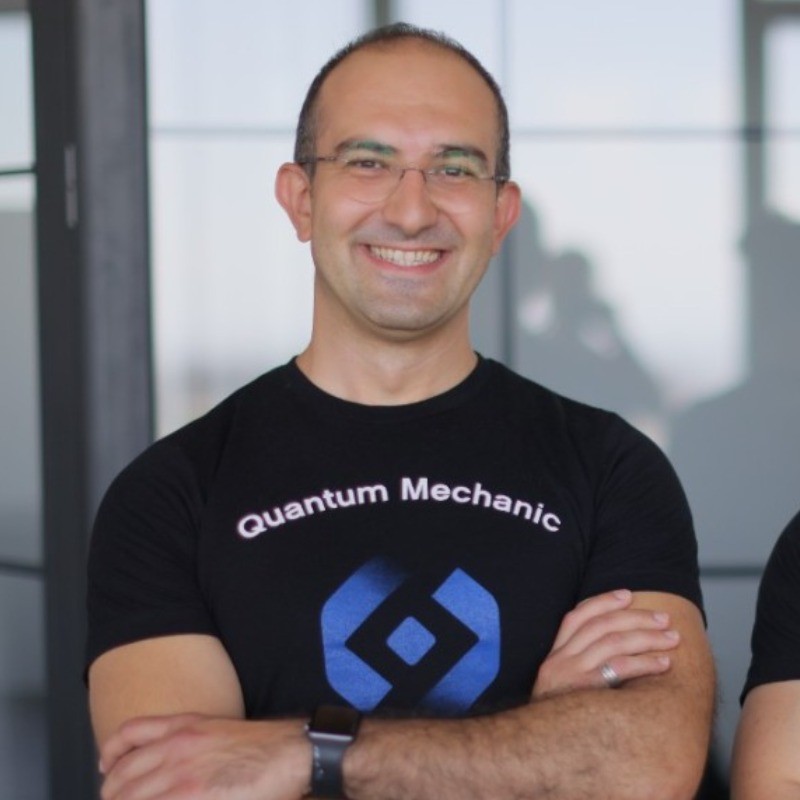
Hrant Gharibyan
CEO , BlueQubit
Dr. Hrant Gharibyan is the Co-founder and CEO of BlueQubit, a California-based quantum software company developing algorithms, simulation tools, and applications for near-term quantum computers. Before founding BlueQubit, he was a Simons Fellow at Caltech, earned his PhD from Stanford, and received his undergraduate degree from MIT. His work spans quantum computing, many-body physics, quantum simulation, and practical applications of quantum algorithms across science and industry.
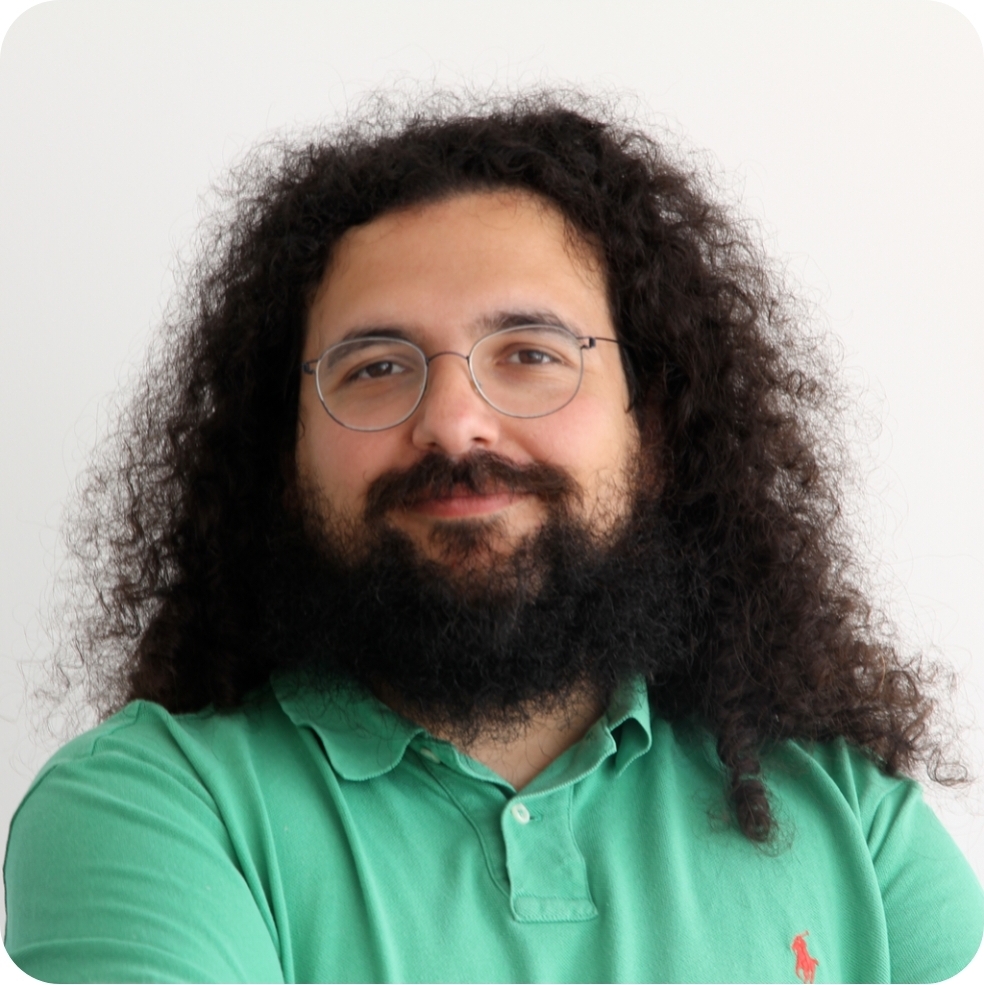
Daniele Loco
Research Scientist , Qubit Pharmaceuticals
I'm a quantum chemist, my job is to develop tools for molecular modelling, exploring new quantum computing algorithms and how they can bring value at scale for practical use cases.

Julian van Velzen
Capgemini , Capgemini
Julian van Velzen is Head of Capgemini’s Quantum Lab, a global network of experts, facilities, and partners. His work spans three core areas. First, quantum technology advisory, ranging from technical due diligence and strategic investment guidance to the identification and development of emerging applications. Second, quantum‑safe transformation, covering the full lifecycle from discovery and planning through testing, validation, certification, deployment, and the design of next‑generation quantum‑safe architectures. Third, scientific intelligence, combining simulation, AI, and data with advanced computing—leveraging HPC today and quantum over time—in closed-loop workflows tightly integrated with physical experimentation. Julian oversees both Capgemini’s research agenda in these domains and the delivery of client engagements.