The Judicious Judge's Guide to Generative Artificial Intelligence and Large Language Models – Session 2
About This Webcast
Mythbusting GenAI Misconceptions: Confidentiality, Privacy, and Security Join us for the second session of The Judicious Judge’s Guide to Generative Artificial Intelligence and Large Language Models, a three-part webinar series featuring the guide's co-authors. This session will explore common myths and misconceptions involving generative AI (GenAI) and large language models (LLMs), with a focus on confidentiality, privacy, and security. Is querying a chatbot more like a Google search or a social media post? Does using these systems always waive privilege or work-product protection? Is using anything other than an enterprise version of a chatbot necessarily risky? Join us as we examine these questions and more, taking a deeper look at the confidentiality, privacy, and security considerations surrounding the use of GenAI. The paper is available for you to download and read at the link below. Bring your questions and comments. The paper may be cited as: Rodriguez, Xavier and Goddard, Allison and Grossman, Maura R. and Thumma, Samuel and Schlegel, Scott, The Judicious Judge's Guide to Generative Artificial Intelligence and Large Language Models (August 25, 2026). This paper has been accepted to appear in the Columbia Science and Technology Law Review, Vol. 28, No. 2 (forthcoming May 2027). Available at SSRN: https://ssrn.com/abstract=7354578 or http://dx.doi.org/10.2139/ssrn.7354578
Speakers
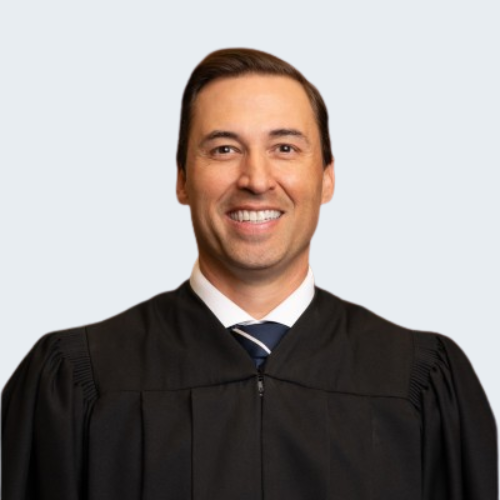
Hon. Scott U. Schlegel
Judge, Division F , Louisiana Fifth Circuit Court of Appeal
Judge Scott Schlegel, an inductee into the Louisiana Justice Hall of Fame, was elected to the 24th Judicial District Court in 2013 and to the Louisiana Fifth Circuit Court of Appeal in 2023. While serving on the trial court, he led a court modernization initiative widely recognized as one of the most advanced in the country for delivering justice online. He also established Jefferson Parish’s Reentry Court and Swift & Certain Probation programs to reduce recidivism and improve community safety. He writes and speaks nationally on artificial intelligence, court modernization, and the future of the justice system, and is a co-founder of the Judicial AI Consortium, a network of state and federal judges across the country working through the practical challenges artificial intelligence presents for the courts.
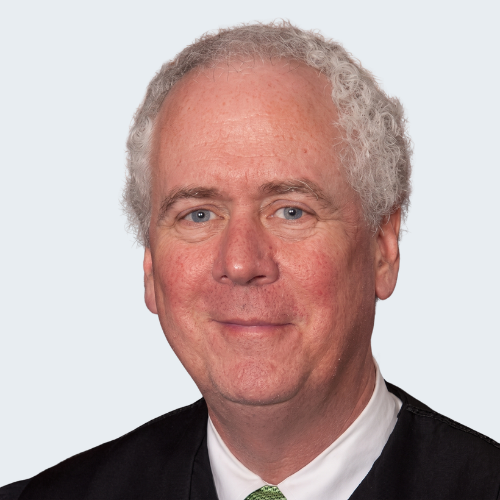
Hon. Samuel A. Thumma (Ret.)
Arizona Court of Appeals (Ret.) , Director of the Arizona Supreme Court’s Center for Forensics and Artificial Intelligence
Samuel A. Thumma is the Director of the Arizona Supreme Court’s Center for Forensics and Artificial Intelligence. Previously, he served as a judge on the Arizona Court of Appeals, Division One, in Phoenix since 2012, serving as Chief and Vice Chief Judge. Before that, he served for five years as a trial judge (criminal and juvenile rotations) on the Arizona Superior Court in Maricopa County. Sam was a Presidential appointee to the Advisory Council of the American Bar Association Task Force on Law and Artificial Intelligence. In the ABA Judicial Division, Sam is a member of the Ethics and Professionalism Committee and the Court Technology Committee. Previously, Sam served as co-chair (2018-2020) and member (2016-2020) of the Editorial Board of The Judges’ Journal. He served as chair of the Appellate Judges Conference and held various AJC leadership positions. He also served as chair of the Appellate Judges Education Institute, Inc., Board of Directors and the Education Committee for the 2019 AJEI Summit, held in Washington, D.C. Sam is a member of the National Judicial College Board of Trustees (2024-present), where he serves as Board secretary, chairs the Governance Committee and is chair-elect of the Board. Sam has been a Uniform Law Commissioner from Arizona since 2012. He has served as a secretary of the ULC Executive Committee and currently chairs the Joint Editorial Board on Civil Litigation and Dispute Resolution, the Study Committee on the Protection of Name, Image, and Likeness, and the Drafting Committee on Updating the Uniform Determination of Death Act (paused). Sam co-teaches evidence at Arizona State University College of Law and has taught more than 600 law-related seminars, in person and remote, internationally, nationally, and locally. He is a frequent author, having published 24 journal articles, seven book chapters and nearly 80 other law-related articles.
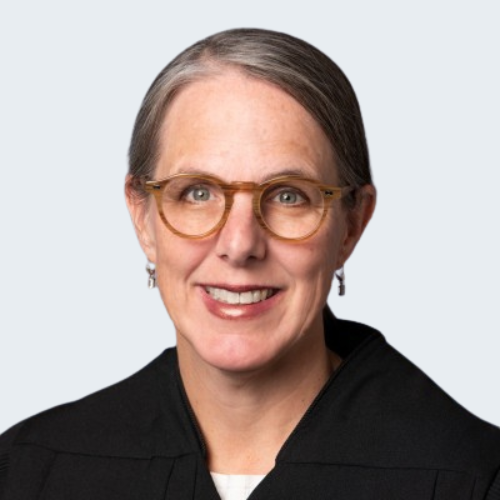
Hon. Allison H. Goddard
U.S. Magistrate Judge , U.S. District Court for the Southern District of California
Judge Allison Goddard was sworn in as a U.S. Magistrate Judge for the Southern District of California in August 2019. She graduated from Boston College in 1993 and received her J.D. from the University of San Diego School of Law in 2000. Judge Goddard spent the first half of her legal career representing corporate defendants in litigation at Cooley LLP and her own law firm, Jaczko Goddard LLP. In 2011, she shifted her practice to representing plaintiffs in complex and intellectual property litigation. She has tried several cases, including class actions and patent infringement disputes. Judge Goddard speaks regularly on eDiscovery and technology in the law. She teaches trial practice and coaches a mock trial team at a local high school. She recently traveled to Uzbekistan to promote the rule of law and judicial independence.
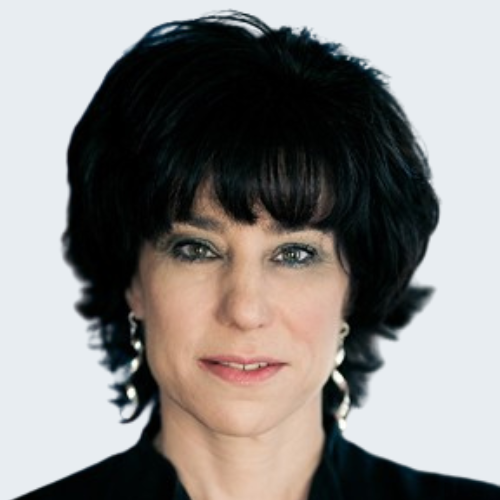
Maura R. Grossman, J.D., Ph.D.
Research Professor and eDiscovery Lawyer, Consultant, Expert, and Special Master , University of Waterloo, Ontario, Canada
Maura R. Grossman, J.D., Ph.D., is a Research Professor in the School of Computer Science, cross-appointed to the School of Public Health Sciences, at the University of Waterloo; an Adjunct Professor at Osgoode Hall Law School of York University; and an affiliate faculty member at the Vector Institute of Artificial Intelligence, all in Ontario, Canada. She is also Principal at Maura Grossman Law, an eDiscovery law and consulting firm in Buffalo, New York, U.S.A. Maura has been widely recognized for her scholarly work evaluating the application of machine-learning technologies (i.e., technology-assisted review or TAR) in the fields of law, government archives, and healthcare. Her studies have frequently been cited in the case law and literature, in North America and abroad. More recently, Maura’s scholarship has focused on responsible Artificial Intelligence (RAI) and AI as evidence. Maura is also well known for her appointments as a special master and/or as an expert in many high-profile U.S. federal and state court cases. In addition to her J.D. from the Georgetown University Law Center, Maura also holds M.A. and Ph.D. degrees in Psychology from the Derner Institute of Adelphi University.