English - Poultry Coccidiosis control programs evaluation: European perspective
About This Webcast
This webinar will offer simultaneous French and Turkish interpretation Join this Live Webinar on Poultry Coccidiosis control programs evaluation: European perspective and listen to Jean-Michel Répérant, Doctor in Parasitology of the University of Paris XII and Tours. Learn about the different methods used to control coccidia and the current regulations in the European Union. You will understand how each products regulatory approval and promotional claims are based on the demonstration of product efficacy to the authorities. Detailing the different tools available when tackling coccidia we will discuss the testing required to gain registration and subsequent use in the field. Many control tools are available to reduce the impact of these parasites including disinfectants, anticoccidial additives in the feed, live vaccines, veterinary treatments in case of clinical outbreaks and alternative solutions based on plant extract or essential oils. Join this webinar if you wish to learn from a renowned expert in Parasitology. Duration: 1 hour 45 minutes Keep learning to be part of The One Way of Thinking in the Poultry Industry. #ThinkActSustain #WhyWeInnovate #TheOneWayofThinking
Speakers
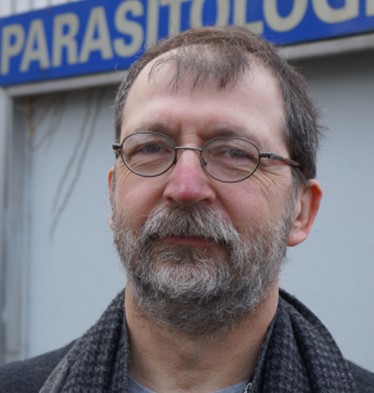
Speaker: Jean-Michel Répérant
Research engineer , ANSES
Jean-Michel Répérant is Doctor in parasitology of the Universities of Paris XII and Tours. After studying Cryptosporidium and Toxoplasma at INRA Nouzilly and University of Tours, he now heads the avian parasitology team at the Ploufragan research laboratory in Brittany, belonging to Anses, the French Agency for Food, Environmental and Occupational Health & Safety. Since 1996, his research at Anses has focused on avian parasites, especially coccidia of the genus Eimeria. Maintaining a substantial collection of pure strains of Eimeria species of chicken and turkey, his team has developed models to induce clinical coccidioses in order to evaluate present and future strategies to control these diseases. Using this tool, his team screened a large number of candidates with expected effects on coccidia. More recently, he developed a necrotic enteritis model with typical lesions, involving co-infection of Clostridium and coccidia. He also studies helminthic infestations of free range poultry, obtaining last year the first results of prevalence of nematodes and tapeworms in free range and organic chickens and layers in France. Degrees High school degree (mathematics, physics, chemistry series), 1984, Blois Two year university degree in biology-ecology, 1986, University of Tours BSC Degree (Bachelor of Sciences) in cell biology & physiology, 1989, University of Tours Master’s degree of Physiology, 1989, University of Tours One-year degree before postgraduate studies “Host-parasite interactions”, 1990, University of Creteil (Paris XII) and Tours PhD thesis, life sciences, with honors, 1994, Tours. Internship at the National Institute of Agricultural Research (INRA)

Host: Fernando Vargas
Poultry Global Technical Director , Merck Animal Health