Multi-Harmonic Detection Accessory Info Day
About This Webcast
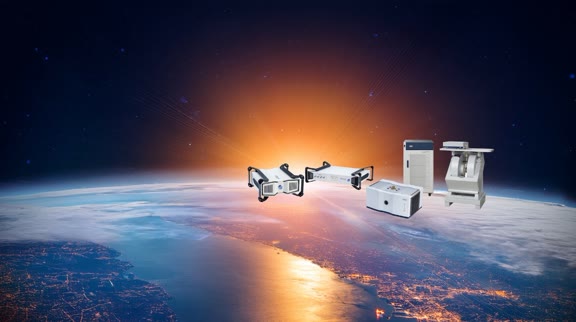
The Multi-Harmonic Detection (MHD) accessory is an accessory that increases the sensitivity of CW EPR experiment. It is introduced in collaboration with Novilet and comes in two flavors, SD10 and HD100. The SD10 (dedicated for benchtop Magnettech ESR5000) aims for efficiency and the HD100 aims for perfection. This webinar will cover the technical and practical aspects of the MHD, showcasing its capabilities in detecting multiple harmonics of the modulation frequency, reconstructing the line shape, and improving the signal-to-noise ratio of a weak EPR signal. I[TH1] t will also include a live demonstration on accessory to presenthow it works in practice. Key Learning Points The potential of Multi-Harmonic Detection in various applications will be highlighted along with: How the Multi-Harmonic Detection works What experiments benefit from the accessory Selecting the right experimental parameters Processing of the acquired data Who Should Attend? Undergraduate and graduate students in chemistry, biochemistry, physics, and related fields Early-career researchers and postdoctoral fellows new to EPR spectroscopy Professors and instructors teaching EPR spectroscopy or related courses Industry professionals, scientists, and engineers in chemical, pharmaceutical, and materials science industries
Speakers
Yu-Kai Liao
EPR Applications Scientist
Dr. Yu-Kai Liao obtained his M.Sc. degree in Physics from Leipzig University, where he focused on continuous wave EPR studies of flexible metal-organic frameworks (MOFs). Following this, he pursued his Ph.D. at the University of Turin under the guidance of Prof. Mario Chiesa, with co-supervision from Prof. Andreas Pöppl at Leipzig University. His doctoral research centered on using pulsed EPR techniques to investigate the local morphologies of transition metal ions on solid surfaces in heterogeneous catalysis. After completing his Ph.D., he worked as a post-doctoral researcher in Turin where he studied metalloenzymes and qubit systems. In May 2024, he joined Bruker as an EPR Applications Scientist.
Thilo Hetzke
EPR Applications Scientist at Bruker BioSpin
Dr. Thilo Hetzke received his M.Sc. degree in Chemistry in 2015 at the Goethe University Frankfurt. He then started his Ph.D. work in the group of Prof. Thomas Prisner at Frankfurt, which he completed in 2020. In his Ph.D. research, he mainly focused on applications of pulsed dipolar and hyperfine EPR techniques on RNA molecules and Mn2+complexes. After a short post-doctoral stay in Frankfurt, he joined Bruker in 2021 as an applications scientist in EPR.