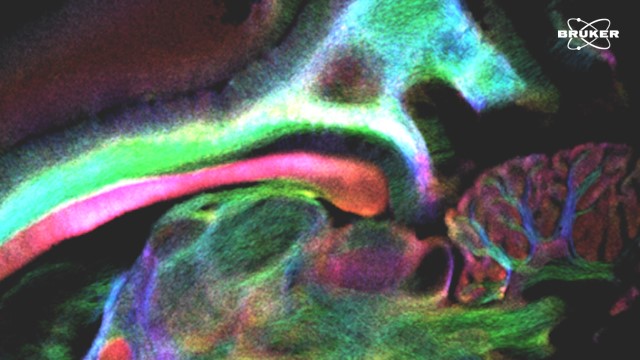
Quantification and application of CEST signals in rodent brain
About This Webcast
Dr. Zhang then elaborates on his contributions to these goals using his BioSpec 11.7 T, focusing on CEST quantification, which he uses for early stroke detection and in combination with pH guided surgeries. After an introduction to CEST and the Z-spectrum, he discusses quantification challenges, such as asymmetric pools on both sides, that direct saturation and solid MT do not add up linearly to the signal, that it is difficult to separate close/overlapping pools, and that r1 contamination is not considered. He then describes his pH guided brain tumor surgery using CEST mapping and his pH responsive Raman probe. Key Topics: CEST Imaging Challenges Quantification methods New NOE signal pH Guided Therapy CEST mapping Novel pH responsive Raman probe Application to glioma surgery Who Should Attend? This webinar is motivating for both neurologists working on stroke detection and oncologists focusing on tumor delineation and surgery as well as all those working on CEST advancements.
Speakers
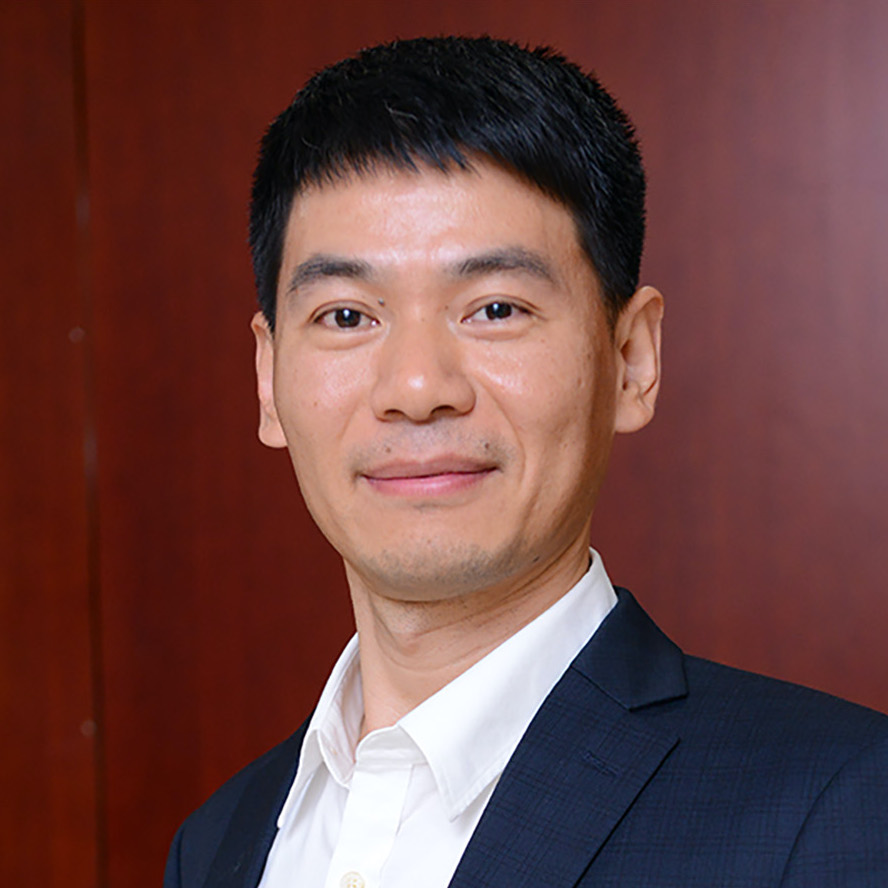
Dr. Xiaoyong Zhang
Associate Professor , Institute of Science and Technology for Brain-Inspired Intelligence - Fudan University
Dr. Xiaoyong Zhang is an Associate Professor in the Institute of Science and Technology for Brain-Inspired Intelligence (ISTBI) at Fudan University. Dr. Zhang has been engaged in the field of MRI for many years. His current research focuses on mapping and investigating brain disorders using chemical exchange saturation transfer (CEST) and MR spectroscopy (MRS) at molecular and metabolic levels. Additionally, he also interested in the application of advanced deep learning algorithms for MRI analysis.