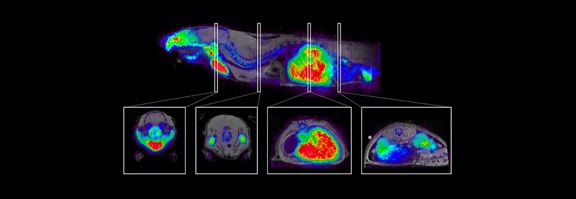
Accessing Liver Diseases with Multiparametric PET/MR
About This Webcast
This webinar will present different approaches to study liver diseases with simultaneous PET/MR Imaging. Our first speaker Professor Erik Shapiro from Michigan State University will focus on liver function and how new ways of combining PET and MR imaging using hepatospecific metal chelate PET tracers and contrast enhanced MRI potentially can be used to observe early changes in liver function during disease. The second part of the webinar is presented by Viktoria Ehret and Usevalad Ustsinau from Medical University of Vienna. Their talk will focus on liver metabolism and how combining metabolic targeted PET tracers and deuterium metabolic imaging (DMI) can be used to enhance our understanding of organ-level metabolic processes in vivo. The talks will be presented live followed by a Q&A session. Key Learning Points ( Part 1 ) What is the function of the liver and how is it affected by disease How can we measure specific aspects of liver function What are the benefits and disadvantages of using MRI to measure liver function Turning MRI contrast agents into PET agents How can simultaneous PET/MRI be used to better measure liver function Key Learning Points ( Part 2 ) PET/MR DMI/li> Preclinical Imaging Metabolism Liver Who Should Attend? Researchers, postgraduate students, and principal investigators working in academia as well as researchers working with drug and tracer development in the pharmaceutical sector. Some basic understanding of PET and MRI imaging is required.
Speakers
Erik M. Shapiro
PhD Associate Chair and Professor of Radiology , Michigan State University
Erik Shapiro is Associate Chair of Research and a Professor in the Department of Radiology at Michigan State University. His Molecular and Cellular Imaging Laboratory (MCIL) develops and uses magnetic resonance imaging (MRI), positron emission tomography (PET), and x-ray computed tomography (CT) for molecular and cellular imaging of biological phenomena, regenerative medicine, and early detection of disease. Dr. Shapiro graduated from the State University of New York at Binghamton with a B.S. in chemistry and holds a M.S. and Ph.D. in chemistry from the University of Pennsylvania. He conducted his post-doctoral work in molecular imaging at the National Institutes of Health. He was Assistant Professor of Diagnostic Radiology at Yale University School of Medicine prior to joining MSU. He is a recipient of an NIH Director’s New Innovator Award and the Distinguished Investigator Award from The Academy for Radiology & Biomedical Imaging Research.
Viktoria Ehret
MSc, Division of Endocrinology and Metabolism , Department of Medicine III, Medical University of Vienna, Austria
Viktoria Ehret, Division of Endocrinology and Metabolism, and Usevalad Ustsinau, Division of Nuclear Medicine (Experimental Nuclear Medicine), are pursuing their Ph.D. degrees, working in the Preclinical Imaging Laboratory at the Medical University of Vienna, Austria. Ms. Ehret earned her Master's degree in Physics with a specialization in Medical Physics from Eberhard Karls University in Tübingen, Germany, while Mr. Ustsinau completed his degree in Biomedical Engineering at Brno University of Technology in the Czech Republic.

Usevalad Ustsinau
MSc, Division of Nuclear Medicine, Department of Biomedical Imaging and Image-Guided Therapy , Medical University of Vienna, Vienna, Austria
Usevalad Ustsinau, Division of Nuclear Medicine (Experimental Nuclear Medicine), is pursuing his Ph.D. degree at the Preclinical Imaging Laboratory at the Medical University of Vienna, Austria. Mr. Ustsinau completed his degree in Biomedical Engineering at Brno University of Technology in the Czech Republic.