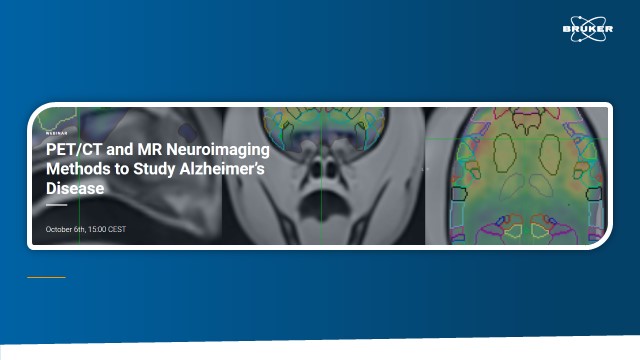
PET/CT and MR Neuroimaging Methods to Study Alzheimer’s Disease
About This Webcast
Alzheimer’s disease (AD) is a devastating neurodegenerative disorder affecting nearly 55 million people worldwide and is expected to increase over the next several years. Our limited understanding of the mechanisms that trigger the emergence of AD has contributed to the lack of interventions that stop, prevent, or fully treat this disease. We are working to establish the marmoset as the first primate-specific model to reveal the earliest cellular and molecular events of AD processes and allow charting of AD progression from its inception. We believe that the simultaneous assessment of genetic, molecular, functional, behavioral, and pathological phenotypes in marmosets will provide translatable knowledge of the origins and progression of AD in human populations. In this webinar, I will describe our use of multimodal neuroimaging techniques to evaluate AD-related phenotypes in our marmoset AD models, carrying all imaging in conscious, fully awake animals, thus avoiding the confounds of anesthesia. Key Learning Points Neurodegenerative diseases Alzheimer’s disease Neuroimaging Marmosets PET/CT MRI Awake multimodal imaging 18F-FDG 11C-Pittsburgh Compound B (PiB) What to expect? This webinar will attract academic researchers, postgraduate students, principal investigators, and researchers in the pharmaceutical sector, particularly in drug development, working to fight neurodegenerative diseases. This webinar will benefit those working with small animals for drug discovery research seeking to understand better the role of cutting-edge imaging methods to complement their existing research programs.
Speakers

Dr. Afonso Silva
Endowed Chair Professor of Translational Neuroimaging , University of Pittsburgh Brain Institute
Dr. Silva was born in Sao Paulo, Brazil. He received his bachelor’s and master’s degrees in Electrical Engineering from Universidade Federal de Pernambuco, Recife, Brazil, and his Ph.D. degree in Bioengineering from Carnegie Mellon University, Pittsburgh, USA, where he worked on non-invasive MRI measurements of cerebral blood flow using the arterial spin labeling technique. He then went on to do post-doctoral training in the Center for Magnetic Resonance Research at the University of Minnesota, Minneapolis, USA, where he studied the temporal and spatial characteristics of functional brain hemodynamics. In 1999, Dr. Silva joined the Intramural Research Program in the National Institute for Neurological Disorders and Stroke (NINDS), National Institutes of Health (NIH), Bethesda, MD, working first as a Staff Scientist and becoming a tenure-track investigator in 2004. Dr. Silva earned tenure in 2012. In 2018, Dr. Silva moved to the University of Pittsburgh, Pittsburgh, USA, where he currently is Professor of Neurobiology. Dr. Silva’s main research interests are in understanding mechanisms of cerebrovascular dysfunction as a common cause of several neurodegenerative diseases. Dr. Silva has extensive experience in the development and application of multimodal neuroimaging methods to study the brain’s anatomy and function. His laboratory works with genetically-engineered marmoset models of brain diseases, including stroke, Alzheimer’s disease and multiple sclerosis.