
Preclinical MR Fingerprint and Vascular MR Fingerprint
About This Webcast
MR Fingerprinting has seen much development in the clinic field since its introduction almost 10 years ago. Usage in preclinical settings have been less and Emmanuel Barbier discusses the status of the method in preclinical research and his work in this area while taking the viewer through a virtual video tour of his institute. Emmanuel Barbier starts out this webinar with an inside look into his lab, taking the viewer on a video tour of GIN, Grenoble Institut Neurosciences and IRMaGe, where the BioSpec 94/20 and BioSpec 47/40 are hosted along with an MRI CryoProbe, an EEG, and surgery rooms. He briefly shows us some of his past and current work, including the ASL package, which was developed together with Bruker, MEGAPRESS, Compressed Sensing, and focused ultrasound to open the blood-brain-barrier, before moving onto the topic of MR Fingerprinting and specifically, MR Fingerprinting of the vasculature. Key Topics: MR Fingerprinting Overview of method and applications Clinical vs. preclinical status Optimization of acquisition pattern Dictionary Mapping Generation of dictionary Searching the signal match in the dictionary Vascular MR Fingerprinting Microvascular network Who Should Attend? Researchers wishing to gain more knowledge of the field of MR Fingerprinting for faster mapping, as well as those interested in microvascular networks will find this webinar particularly beneficial.
Speakers
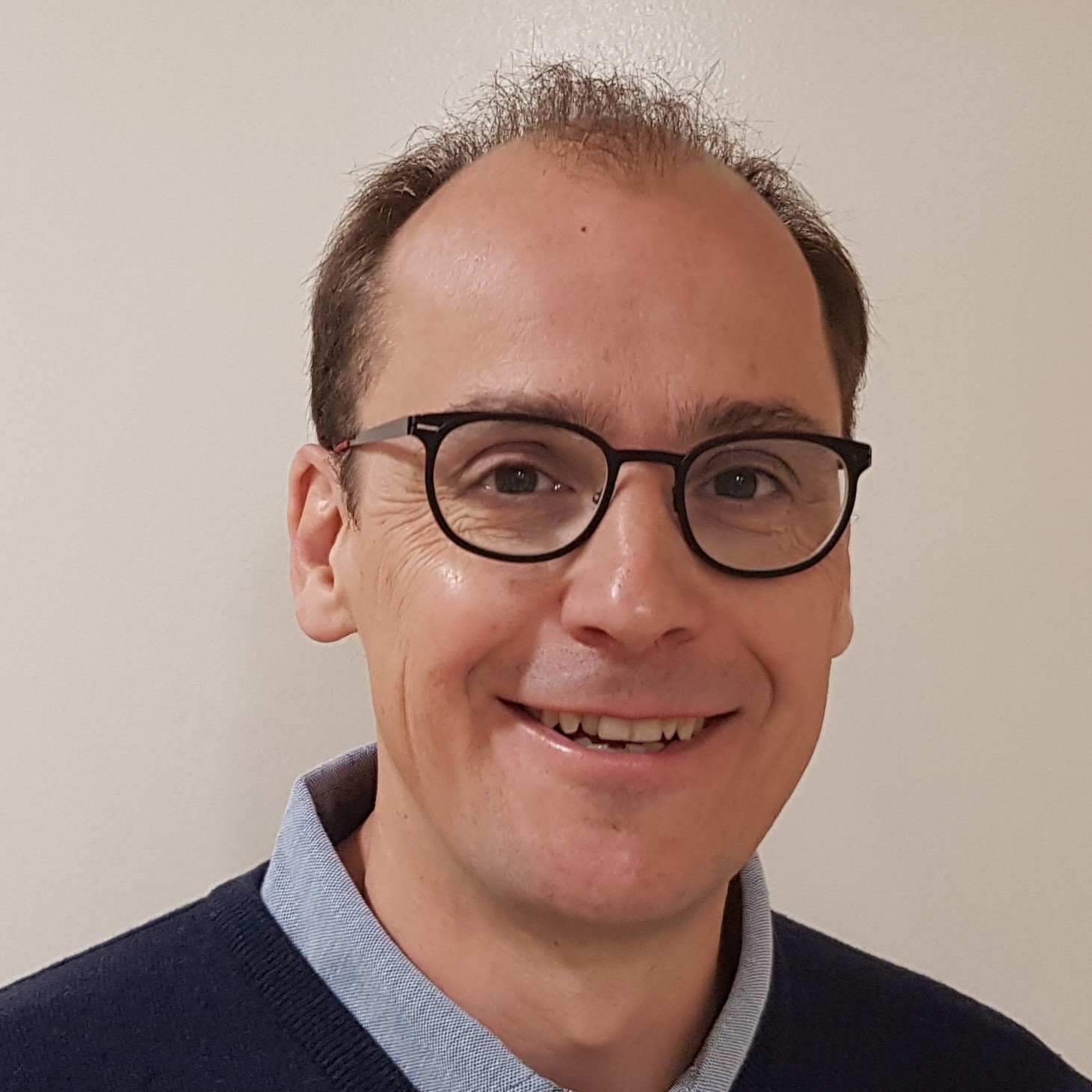
Dr. Emmanuel Barbier
Director , Grenoble Institute of Neurosciences
After engineering studies, Emmanuel Barbier did his PhD in the field of arterial spin marking at Claude Bernard University (Lyon, France), in collaboration with Carnegie Mellon University (Pittsburgh, USA). After a postdoc at the National Institutes of Health (Bethesda, USA) in Alan Koretsky's laboratory, Emmanuel joined Michel Décorps' laboratory in Grenoble (France). In 2011, he became director of the "Functional Neuroimaging and Brain Perfusion" team at the Grenoble Institute of Neurosciences. His work focuses on the development of MRI methods to obtain quantitative maps of perfusion-related parameters in the brain such as vessel size and density, blood volume, blood flow (in collaboration with Bruker) or tissue oxygen saturation. To obtain informative summary maps of multiparametric quantitative MRI, several studies have focused on statistical data integration. In parallel, he is conducting longitudinal studies on small animals to test new therapeutic strategies in the context of several brain diseases, including cancer, stroke and traumatic brain injury.