
AMD Xilinx Versal for Space and its Ecosystem
About This Webcast
AMD Xilinx Versal for Space and its Ecosystem Session 1: Introduction and Avnet Silica’s Focus on Space Session 2: AMD’s Versal 7nm Radiation Tolerant Adaptive SoC Devices Increase Processing Bandwidth with In-Flight Reconfigurability for Space Missions Demand for sample rates in the hundreds of giga-samples per second combine with constraints in the growth of downlink bandwidth to force a dramatic increase in the need to process vast quantities of data aboard satellites. At the same time, emerging space programs face tight cost constraints and compressed development timelines. AMD’s 7nm XQR Versal System-on-Chip devices provide a flexible system architecture featuring unprecedented amounts of scalar processing, vector processing, logic elements and memory, enabling seamless and reliable processing throughput and connectivity. XQR Versal devices have completed AMD’s organic Class B qualification, adapted from Mil Std 883 class B, providing ample bandwidth for signal and data processing as well as machine learning (ML) inferencing, and allowing for unlimited on-orbit reconfigurability. This presentation provides an overview of the features of the XQR Versal devices, with an update on radiation data for the 7nm Versal in proton environments. We will cover the latest qualification results, and describe the ecosystem of solutions. Q&A Session: Session 3: Renesas Power Solutions for Versal The Versal opens up many new possibilities for satellites but requires a robust set of power supplies to ensure reliable operation. Renesas will present its solution for the core voltage rail as well as a complete power supply reference design for the remaining rails. Session 4: Mercury Systems Memory Solutions for Versal In this webinar, we will discuss how Mercury memory products, including radiation-tolerant DDR4 and NAND, support the Versal product ecosystem and solve complex edge processing challenges from chip scale to system scale. Session 5: Teledyne e2v Memory and RF Solutions for Versal Nicolas Chantier will give an overview of how Teledyne e2v Semiconductors contribute to expand your possibilities to develop innovative space systems around Versal. First with an introduction of the Versal friendly Space grade DDR4 memory modules, to give you more memory breathing space both for the programmable logic and for the processor cores of Versal. A brief introduction into the disruptive innovations that become possible in the 2020s around multi-band highly softwarized RF system leveraging Teledyne e2v microwave data converters and Versal signal processing capabilities. Q&A Session:
Speakers
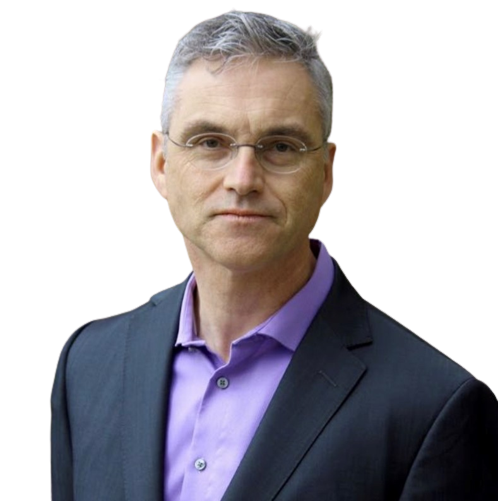
Ken O'Neill
Space Systems Architect , AMD
Ken O'Neill recently joined AMD as Space Systems Architect with responsibility for AMD's participation in the space market, including the Xilinx XQR radiation tolerant and space qualified FPGA product line. Ken has 20 years of experience in the field of radiation tolerant FPGAs and space electronics, and a total of 30 years experience in the FPGA industry. Ken previously worked with Microchip, Microsemi, Actel, and Hewlett Packard. Ken holds a bachelors degree in electronics engineering.
Paul Leys
Market Segment Manager, Aerospace & Defense , Avnet Silica
Paul Leys is the Market Segment Manager for the Aerospace and Defense business at Avnet Silica.He supports the Avnet Silica EMEAI A+D business with the team of local Account Managers and FAEs. He has supported this business for over 25 years and has a particular passion for the Avionics industry. The Avnet Silica goal is to be able to offer a wide range of reliable and leading edge electronic component solutions to its Highrel customers. Paul holds a BSc in Electronics and Electrical Engineering from Edinburgh University.