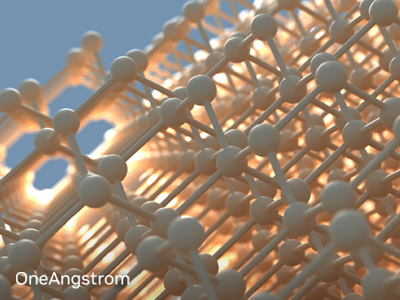
Transforming Molecular Design
About This Webcast
Pharmaceutical researchers are continually on the quest for better, faster ways to design drugs, but juggling independently designed software and data sources has created a long-standing challenge. NVIDIA and OneAngstrom have collaborated to reduce this fragmentation. Join the discussion and see how molecular design is more accessible than ever before. In this webinar, you’ll learn how: Integrative molecular modeling results in streamlined, state-of-the-art workflows for scientists To access NVIDIA BioNeMo™ in just a few clicks to predict protein structures and dock libraries of ligands directly To combine BioNeMo with all other extensions available in SAMSON for modeling, simulation, analysis, visualization, scripting, and more Visit the BioNeMo page for more details. (C) NVIDIA Corporation 2024. All rights reserved. No recording of this webinar should be made or reposted without the express written consent of NVIDIA Corporation.
Speakers
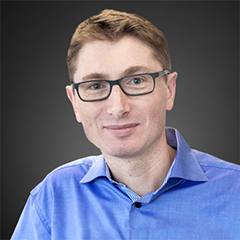
David Ruau
Head of Strategic Alliances, Drug Discovery AI, EMEA , NVIDIA
David is an experienced leader in the healthcare and life sciences industry. David is heading the strategic scientific partnership in healthcare and life sciences across EMEA at NVIDIA. Prior to that, he was chief scientific officer at a healthcare AI company, VP of global data assets and decision science at Bayer pharmaceuticals, and head of scientific computing at AstraZeneca. David's academic background is in computational biology analyzing IPS cells reprogramming and patient medical information in different therapeutic areas. David has authored 30+ peer-reviewed publications and book chapters in journals like Nature, Cell, and Stem Cells.
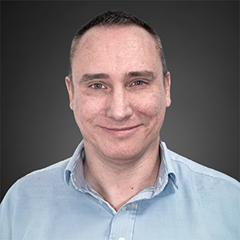
Stephane Redon, PhD
CEO and Co-founder , OneAngstrom
Stephane Redon is co-founder and CEO of OneAngstrom, the developers of the SAMSON platform for molecular design. Until September 2018, Stephane was a senior researcher at Inria and the leader of the NANO-D group that he started in 2008 to develop algorithms for nanoscience. His research has been funded by Inria, Advanced Nano Research (ANR), and the European Research Council. He has been teaching at Ecole Polytechnique in Paris since 2005, where he's still a part-time professor. He’s the principal architect and lead developer of the SAMSON software platform for molecular modeling.